The Language of Dress: Elegance, Structure, and Identity
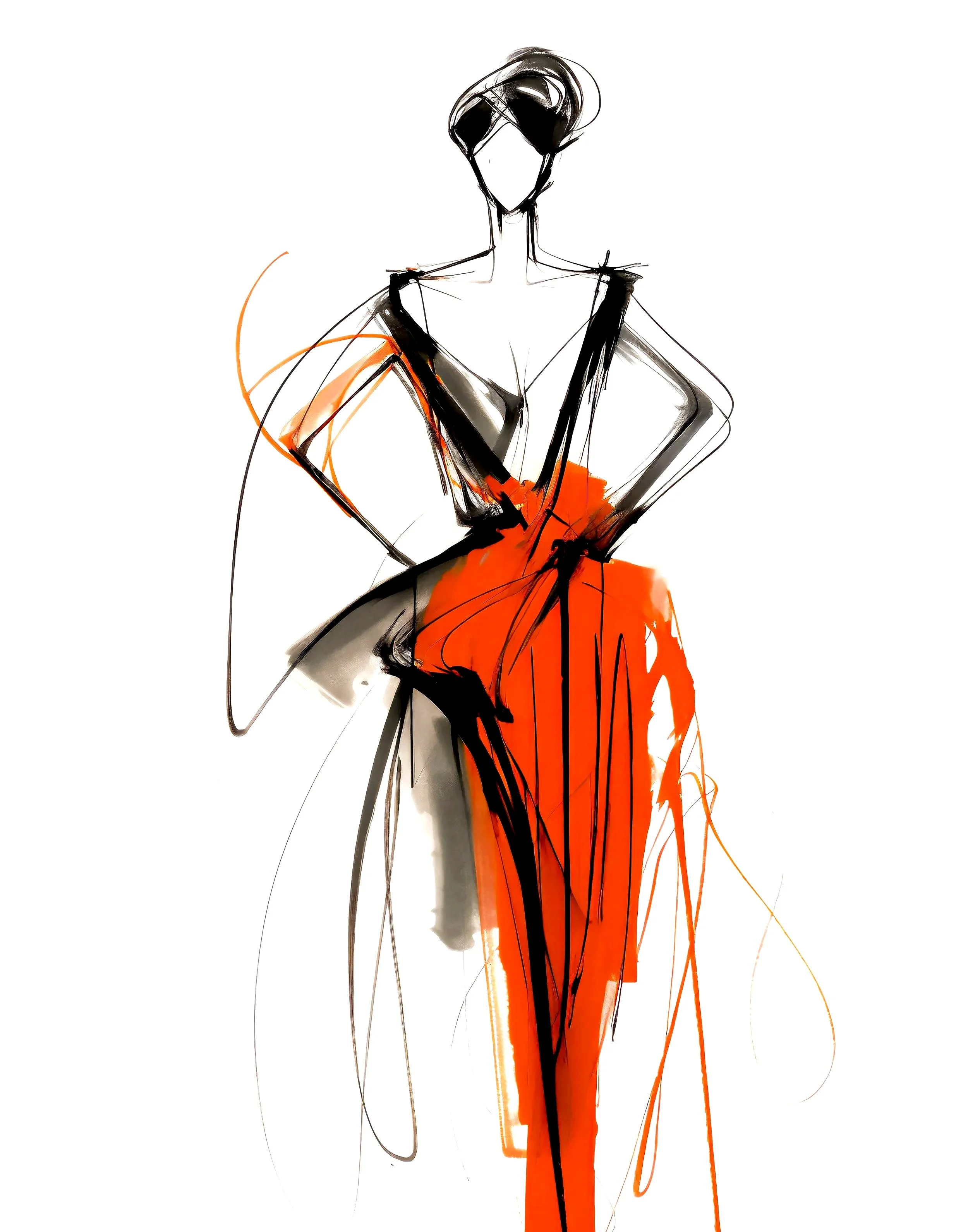
On influence, identity, and the freedom to become who you are through what you wear.
Style has always been shaped by influence, identity, and the freedom to become who you are through what you wear.
Are you the composed elegance of Jacqueline Kennedy Onassis—measured, restrained, and enduring? Or the refined presence of Lena Horne—expressive, poised, and unmistakable?
Perhaps you are something less easily defined.
A trace of Nancy Kwan. The quiet modernity of Anna May Wong. The cinematic glamour of Dolores del Río, the exuberance of Carmen Miranda. The brilliance of Elizabeth Taylor. The command of Diahann Carroll. And always, somewhere in the cultural imagination, Marilyn Monroe—singular, iconic, beyond introduction.
Or perhaps your instinct leans toward the quiet precision of Carolyn Bessette-Kennedy—a study in restraint, where nothing is excessive and everything is considered.
The question is not which one you are. It is whether you were ever meant to choose.
Style, at its most compelling, is never singular. It is layered. Inherited not only through lineage, but through observation, memory, and desire. It is formed in fragments—images remembered, silhouettes admired, women who linger in the mind long after they have left the screen.
The most unforgettable women understood this instinctively. Their style was not imitation—it was a reflection of self.
And that understanding, for me, has evolved.
There was a time when I believed in limitation. That only certain things worked. That style existed within boundaries—defined, narrow, fixed. But time has a way of dissolving those ideas. What replaces them is something far more expansive: permission.
Permission to explore.
To reinterpret.
To say yes.
To color where there was once restraint, to shape where there was hesitation, to step fully into presence where there was once uncertainty.
Now, I find myself moving fluidly between worlds. One day drawn to the opulence of Elizabeth Taylor—decadent, expressive, unapologetically grand. The next, the quiet discipline of Carolyn Bessette-Kennedy—pared back, deliberate, almost architectural in its precision.
And in that movement, something shifts.
Style becomes less about appearance—and more about expression.
I think often of my mother. Her style is unwavering, rooted in the enduring codes of Jacqueline Kennedy Onassis. The Chanel bouclé suit. A single strand of pearls. A diamond brooch placed with care. Vintage handbags. Evening gowns that seem to belong to another era, yet exist effortlessly within this one.
There is something of Rita Hayworth in her beauty. Something of old Hollywood in her presence. She does not chase change. She refines what she knows.
And there is power in that.
But there is also power in evolution.
In allowing yourself to become something new without losing what came before. In understanding that style is not a fixed identity, but a living one—responsive, intuitive, deeply personal.
Fashion offers possibility.
Style defines intention.
And somewhere between the two lies freedom.
So say yes—to what draws you, even if it surprises you. To what feels beautiful, even if it is unfamiliar. To the unexpected combinations, the shifts in mood, the quiet reinventions.
Because in that openness, something remarkable happens.
You begin to recognize yourself.
Not as a singular reference.
Not as a fixed image.
But as a composition.
Style, in the end, is not about perfection.
It is about expression.
A life expressed—
through fabric, through form, through choice—
again and again.