Dorothy Dandridge: An Elegance All Her Own
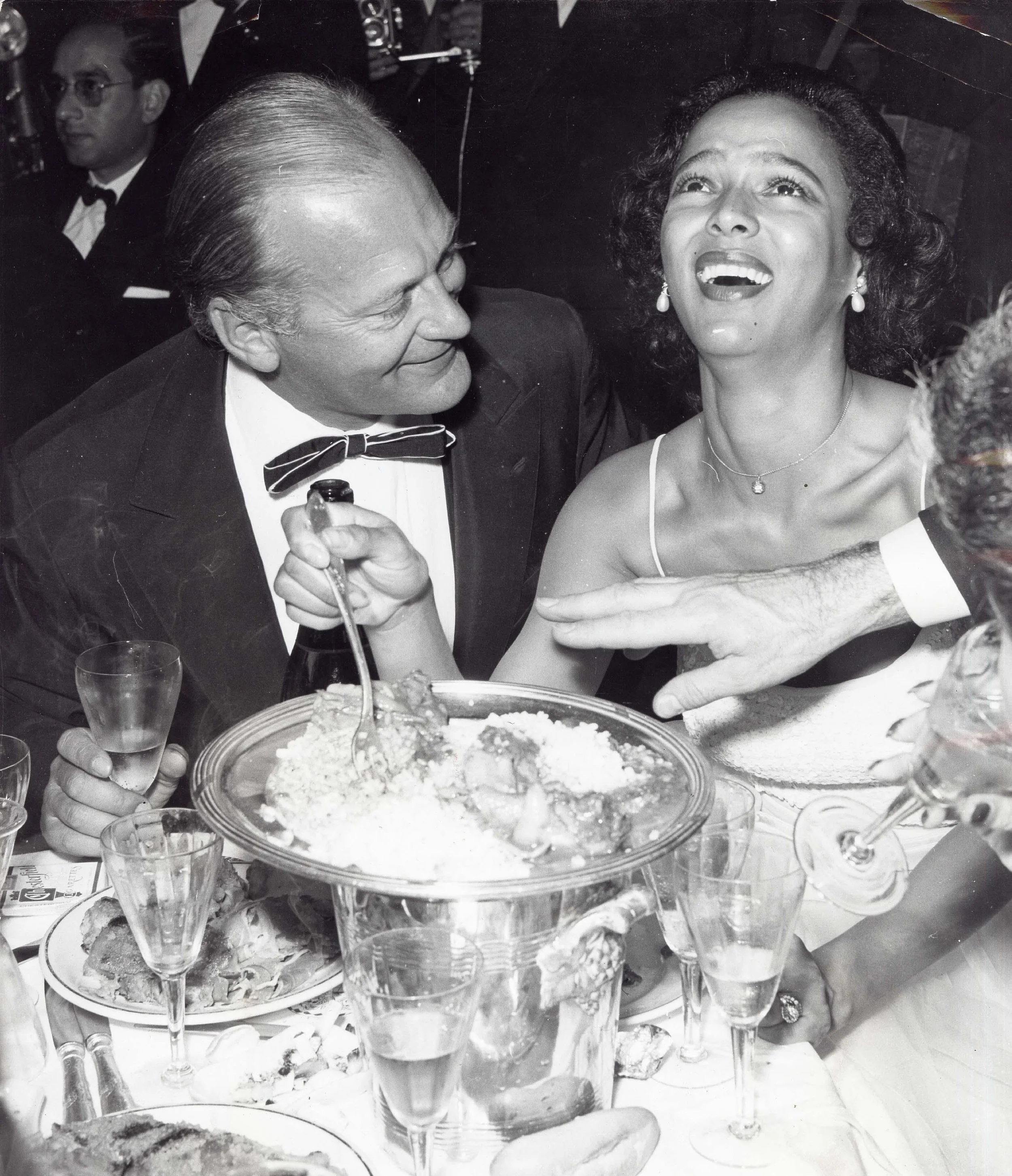
The presence of Dorothy Dandridge required no introduction—composed, assured, and entirely her own.
There are certain presences that do not need to announce themselves. They are understood the moment they appear—refined, self-possessed, and unmistakably distinct.
Dorothy Dandridge possessed that kind of presence.
Beauty, certainly. But also something more enduring: intelligence, restraint, and a quiet command. She moved through the world with a refinement that felt effortless, though it was anything but.
And yet, she existed within a world that was not built to receive her.
Hollywood, in its golden age, was as much about exclusion as it was about glamour. For women of color, the boundaries were not subtle—they were defined, enforced, and rarely crossed. Roles were limited. Narratives were narrow. Opportunity, when it came, arrived with conditions.
As Nat King Cole once observed, Madison Avenue was “afraid of the dark.” It was a sentiment that extended far beyond advertising—into film, fashion, and the broader cultural imagination of the time.
Within that landscape, Dorothy Dandridge did something extraordinary.
She refused reduction.
At a time when the industry offered few roles beyond stereotype, she chose instead to shape her image with intention. Her performances carried nuance. Her presence suggested depth beyond what was written. She did not simply accept the frame—she expanded it.
There is a particular kind of strength in that choice.
To insist on elegance in an environment that seeks to diminish you is not simply aesthetic—it is a declaration of self.
To remain composed in the face of limitation is not passive—it is disciplined.
And to continue, despite it all, is a form of courage that often goes unspoken.
Dorothy Dandridge became the first African American woman to appear on the cover of Life magazine—a moment that signaled both recognition and contradiction. To the world, it suggested arrival. But behind that image remained the same structural barriers, the same limitations, and the same inequities that defined the era.
She appeared, to many, to have everything.
And yet, she did not.
There is a tendency, in retrospect, to romanticize the past—to see only the glamour, the gowns, the light. But to understand Dorothy Dandridge fully is to recognize both the brilliance and the weight she carried. The emotional strain. The professional resistance. The quiet battles that rarely made it into public view.
And still, through all of it, there was elegance.
Not the kind that is performed, but the kind that is held.
Not excess, but control. Not spectacle, but presence.
She understood something that remains true today: that style, at its highest expression, is not about adornment. It is about intention.
There have been meaningful shifts in the decades since—moments of recognition that suggest a widening of possibility. When Hattie McDaniel became the first Black actor to win an Academy Award, receiving the Oscar for Best Supporting Actress for Gone with the Wind, it was both a historic achievement and a reflection of the limitations of the roles available to her. Decades later, when Halle Berry became the first Black woman to win the Academy Award for Best Actress, it marked both a celebration and a long-deferred acknowledgment.
Artists like Denzel Washington and Jamie Foxx have continued to define excellence across generations, their work recognized at the highest level. And most recently, Michael B. Jordan was awarded the Academy Award for Best Actor for Sinners, a moment that reflects progress while quietly echoing the long path that made it possible.
And yet, even in that progress, there remains a quiet awareness of those who came before—those who carried the weight without the same recognition, who moved through far narrower spaces and still left an indelible mark.
Their legacy is not simply historical.
It is foundational.
For women—particularly women of color—elegance has often existed in parallel with expectation. There have been moments in history where femininity was something to be softened, hidden, or denied in order to navigate the world more safely. And yet, time and again, it has reemerged—not as fragility, but as strength.
Dorothy Dandridge embodied that balance.
She did not abandon femininity to be taken seriously.
She refined it. Defined it. Made it her own.
And in doing so, she left something far more lasting than image.
She left a standard.
An understanding that elegance is not given.
It is cultivated. Protected. Claimed.
And that, regardless of circumstance, it remains something no one can take away.