A Study in Ballet: Discipline, Elegance, and Movement
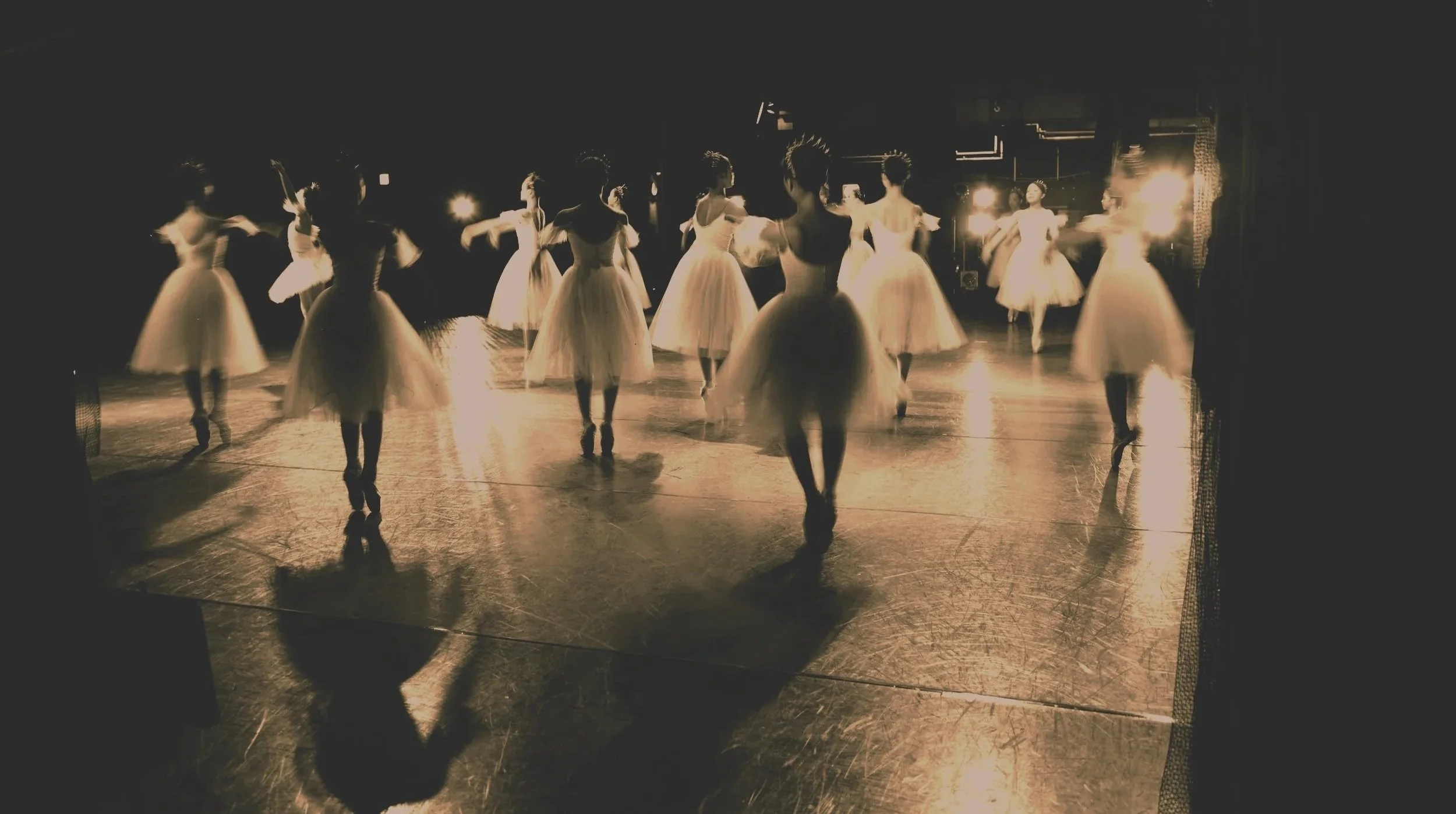
An exercise in elegance.
There has been, at times, a quiet conversation around whether ballet still holds importance in the world we live in now. I’ve found myself returning to that question—not with urgency, but with certainty. For me, the answer has always been clear. It is not only relevant, it is necessary. The level of skill, discipline, and grace it demands is not something that fades with time. It is something that endures—something that will continue to live on, even long after we are gone.
Ballet begins long before the performance. It begins in repetition—movements practiced until they are no longer thought, but known. A gesture is returned to again and again, not in search of variation, but of refinement. Each repetition removes what is unnecessary, leaving only what is essential.
There is a discipline in this that is both exacting and quiet. Control is not imposed for appearance, but for clarity. The body learns to move with intention, to hold a line without excess, to extend without strain. Nothing is hurried. Nothing is accidental. What appears effortless is, in truth, carefully constructed.
Time is the unseen force shaping it all. It cannot be rushed or substituted. Strength is built gradually. Precision is earned slowly. The dancer does not arrive at elegance—they grow into it. Hours become days, days become years, and within that passage, the body begins to understand what the mind once tried to direct.
What ballet reveals is that beauty is not created in a moment, but formed over time. It is the result of attention, of returning, of staying with something long enough for it to become second nature. Repetition, often mistaken for monotony, becomes a kind of devotion—a commitment to the gradual shaping of form.
This rhythm of practice is not unique to ballet. It is shared across the musical arts, where repetition is equally a discipline of refinement. As a classically trained pianist, as well as a student of jazz, I understand implicitly the quiet struggle—and at times, the agony—of patience and diligence. The act of practicing something over and over again in pursuit of a level of perfection that always seems just out of reach. The hope of playing the right note, of not missing, of not striking the wrong one. The desire that both the audience, and I myself, might fully experience the message I am trying to convey through the music.
I often find myself reflecting on the endless hours—hours upon hours—of concentration and preparation. The repetition that can feel relentless, yet necessary. And within that process, something begins to change. The discipline gives way to understanding. The effort softens into expression.
A violinist draws the bow across a single phrase again and again, listening for clarity, for tone, for something just beyond what was achieved before. A singer sustains breath, revisits scales, shapes vowels—each repetition bringing the voice closer to control, to resonance, to truth.
In each case, the act is the same: to return, to refine, to listen more closely. Practice is not simply preparation—it is transformation. It teaches patience. It builds sensitivity. It allows the artist to move beyond effort into expression. What once required concentration begins to unfold naturally, leaving space for interpretation, for feeling, for presence.
Control, too, is often misunderstood. It is not rigidity, but awareness. A sensitivity to balance, to space, to the smallest adjustment. It allows movement to appear light, even when it is built on strength. It gives structure to expression, so that what is felt can be seen clearly.
In this way, ballet becomes more than performance. It becomes a study in how time refines us—how discipline, applied patiently, reveals something deeper than technique. It reveals presence. It reveals intention. It reveals a kind of quiet mastery.
Elegance, then, is not something added at the end. It is something that emerges—slowly, almost imperceptibly—through the steady practice of doing the same thing well, again and again.
And in that repetition, something shifts. What was once effort becomes ease. What was once studied becomes lived. Beauty, no longer pursued, begins simply to exist.
This is why ballet endures. And perhaps, too, why it speaks so deeply to those of us who practice other forms of discipline and art. As a pianist—moving between the structure of classical music and the improvisation of jazz—I recognize the same quiet demands: the repetition, the control, the patience, the surrender to time. In both, there is a return to the same principles, shaped again and again until they become instinct.
This is why I love ballet. And why it continues to speak to me.
And it is why I encourage you, if you have not yet had the opportunity to experience the arts—to begin. Go to the ballet. Allow yourself to be immersed in it. Let the music and the power of the dance carry you somewhere beyond the everyday.
If it is your first time, go during the holidays and experience The Nutcracker. There is something singular about that first encounter—the stage, the orchestra, the quiet anticipation before the curtain rises.
Listen, in particular, for the moment when the music seems to shimmer—to lift into something almost otherworldly. You may be thinking of the “Dance of the Sugar Plum Fairy,” with its delicate, bell-like celesta, or the “Waltz of the Flowers,” where the music opens and expands, carrying the dancers in sweeping motion across the stage.
Let it take you there. Let the magic and power of the arts transform into a world of discovery—into something you never knew you could enjoy.