Opera: Power, Emotion, and the Art of the Voice
Opera begins where language ends.
There are moments when words, however carefully chosen, fail to hold the weight of what we feel. Opera answers that silence. It takes what cannot be spoken and gives it breath—expanding emotion into something sustained, something luminous, something that can fill an entire room.
I have known this not only as a listener, but through proximity. My sister, a classically trained singer, came to music through opera first—jazz following closely behind. In her voice, I hear something rare: a meeting of worlds. There is the warmth and velvet phrasing reminiscent of Sarah Vaughan, the clarity and purity of Kathleen Battle, and the emotional depth, the almost unbearable intensity, of Maria Callas. It is a sound shaped not only by talent, but by devotion—by years of study, of listening, of returning again and again to the discipline of the voice.
We grew up surrounded by that reverence. The voices of Luciano Pavarotti and Mario Lanza were not distant legends, but living presences in our home. There was something unmistakable about them—the way a single note could command a room, the way breath could become power, the way sound could feel almost physical in its force.
Because that is what opera is. It is physical.
It is breath drawn deep into the body, anchored in the diaphragm, shaped with precision, and released with control so exacting it appears effortless. It is the discipline of the vocal cords responding to that breath—stretching, adjusting, balancing—to produce a tone that can travel without amplification, filling a theater, rising above an orchestra. It is not simply singing.
It is architecture built in sound.
And yet, for all its structure, opera is not rigid. It is expansive. It is expressive. It allows emotion to reach its fullest form.
In this way, it is not so far from jazz.
Jazz, too, is built on discipline—on repetition, on listening, on control. But it carries with it a freedom, an openness to interpretation, a willingness to move beyond the written note. It has often been said that jazz is the closest modern relative to opera, and there is truth in that. Both demand mastery. Both require surrender. Both transform technique into expression.
Even great composers like Duke Ellington understood this connection, blending elements of classical form and jazz language in ways that expanded both.
So the question arises, as it often does: is opera a fading art?
I don’t believe it is.
But I do believe it is an art that asks more of us now than it once did.
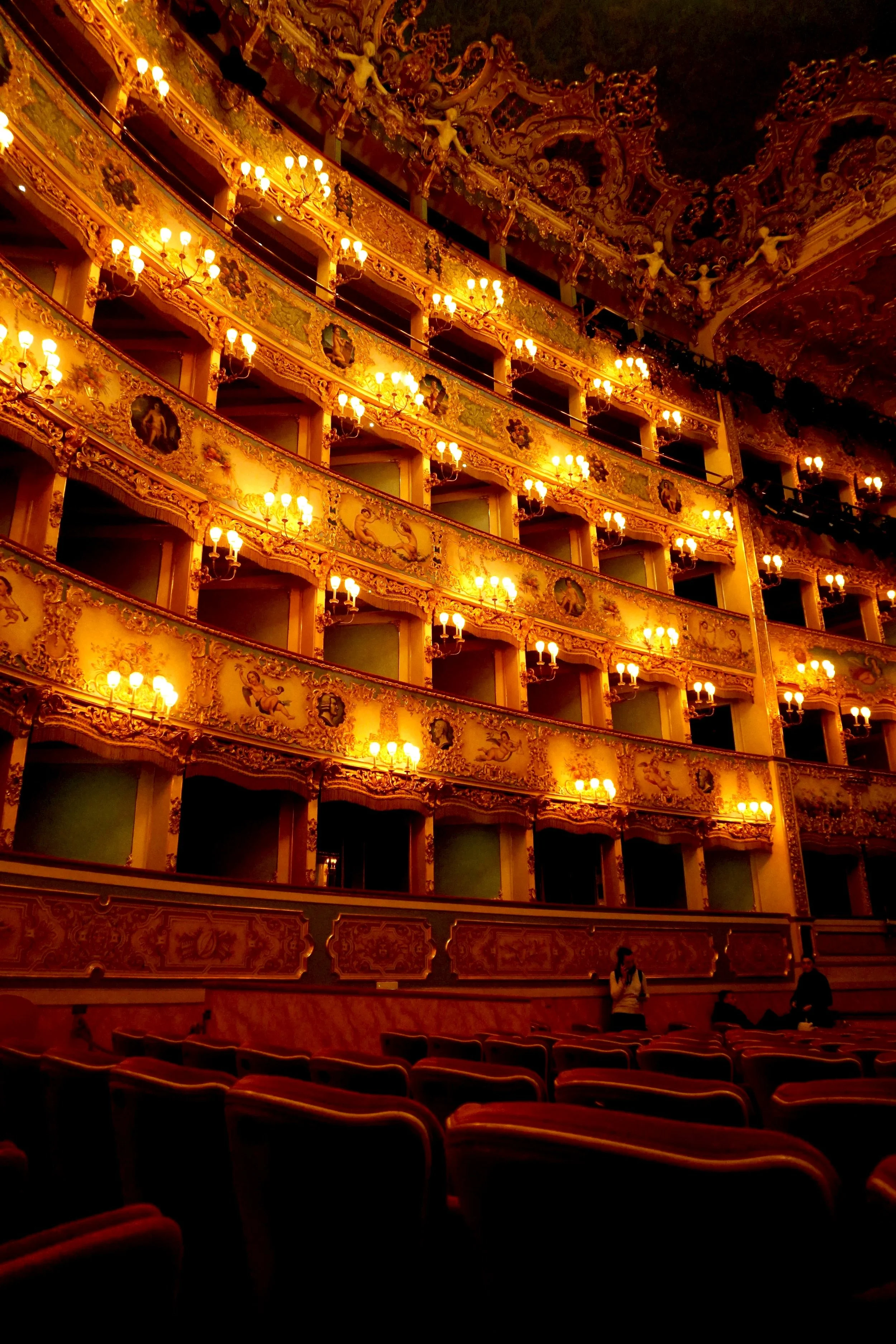
There is something singular about entering an opera house—the quiet anticipation, the weight of the space, the collective stillness before the first note. You sit, aware that what you are about to hear cannot be replicated casually. And then it happens: a voice rises, unamplified, filling the room with a force that feels almost impossible. It overtakes the orchestra, not in competition, but in communion. And for a moment, you are suspended within it.
That experience is not outdated. It is rare.
And rarity, in a world of constant access, can be mistaken for irrelevance.
The challenge, then, is not that opera has lost its power. It is that fewer people have encountered it.
Exposure matters.
To ensure that opera continues to live with the same vitality it once held, it must be seen and heard by new audiences. Streaming platforms can play a role—bringing historic performances and contemporary productions into homes, allowing curiosity to begin quietly. Education matters as well. Even a brief introduction within music curricula could open a door, offering young people a first encounter with a form they may never have considered.
Opera does not need to be simplified. It needs to be accessible.
It needs to be encountered not as something distant or formal, but as something deeply human.
Because at its core, opera is not about grandeur—it is about feeling. It is about what happens when the voice is given the space to carry emotion fully, without interruption, without restraint.
This is why it endures.
And why, for those who have experienced it, it is never forgotten.
Let yourself be immersed in it. Go to the opera. Sit in the stillness before it begins. Allow the voice—when it arrives—to meet you where words cannot.
You may find yourself somewhere entirely new.
I find that I appreciate it now more than I ever have before. There was a time when that appreciation was misunderstood. My sister and I were teased for loving something others assumed belonged to a certain world, a certain class—when in truth, it was simply something we loved. After long Saturday mornings—mine at the piano, hers in voice lessons—our father would drive us home with music filling the car. One moment it would be Ludwig van Beethoven, Sergei Rachmaninoff, or Yo-Yo Ma, and later David Sanborn—all carried through the quiet constancy of NPR and the familiar rhythm of 91.7.
What I didn’t know then was that one day, I would not only meet him, but come to know him personally. That memory remains with me—something I will always value, not for what it signifies to anyone else, but for what it means to me.
And I am grateful that nothing—no misunderstanding, no assumption—ever took away my love for the art.