Where the Table Begins: Tuscany, Simplicity, and Seasonality
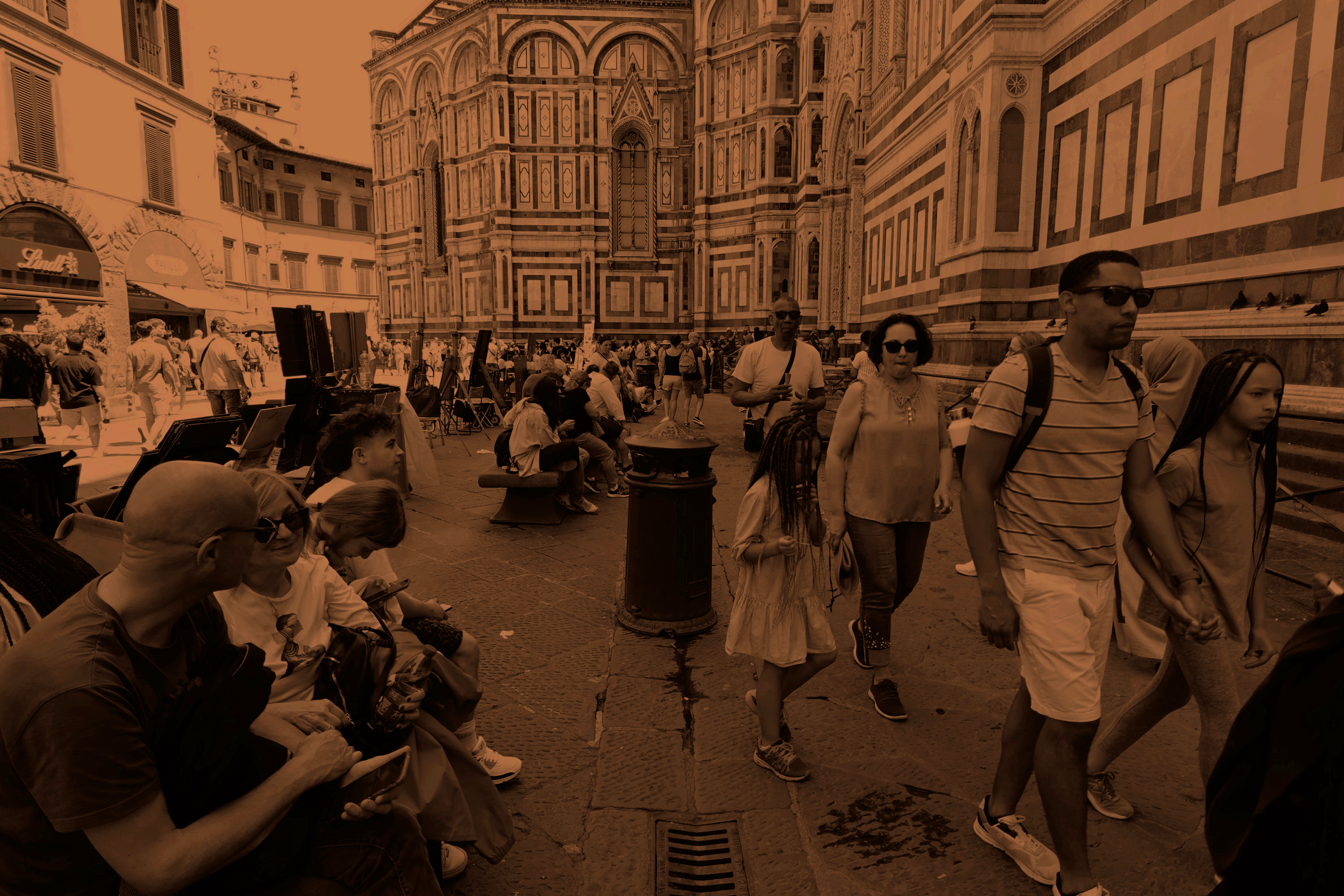
The Cathedral of Santa Maria del Fiore (Il Duomo) in Florence is a masterpiece of Renaissance architecture. It is truly beautiful in the Tuscan light.
Captured by Along the Riviera
There are places that stay with you long after you’ve left them. Florence is one of them.
Not only for its architecture, its history, or its light, but for the way it makes you feel while you are there. For the sense of ease, the sense of grace that feels both foreign and deeply familiar at once.
Each morning began the same way. The sun, gentle but certain, warming the air as it touched my face. Sitting in the town square, unhurried, without any real sense of time—only presence. Coffee in hand, something simple before me to eat, and the quiet awareness that nothing needed to be rushed.
It is in those moments that you begin to understand Florence.
The food, much like the city itself, is rooted in restraint. It does not attempt to impress—it simply is. And in that simplicity, it becomes extraordinary. A pizza, perfectly made, carrying with it the warmth of the oven and the balance of ingredients chosen with care. A gelato, crafted by a local artisan, offered not just as something to taste, but as something to share.
What remains with me just as vividly as the food is the people.
There was a warmth—immediate, unguarded. Smiles offered without hesitation. Laughter that felt genuine, not performed. A kind of openness that made you feel less like a visitor and more like someone returning. The gelato maker greeting us each day with familiarity, with kindness, with a sense of joy that felt effortless.
There is a word for it—famiglia.
Not only family by blood, but a way of being. A way of including, of welcoming, of living in connection with others. It is something I had been searching for, perhaps without even realizing it. And in Florence, it revealed itself not through grand gestures, but through the smallest interactions.
Italy is often called a country of love—amore. But it is also a country of friendship, of closeness, of shared moments that linger.
And nowhere is that more evident than at the table.
At Trattoria ZaZa, one of Florence’s well-known restaurants, that sense of care revealed itself in a way I will not forget. The staff—attentive, calm, and deeply kind—took particular care with my parents. My mother, who lives with a food allergy, needed reassurance that what she was about to eat would not cause her harm. It was not treated as an inconvenience, but as something important. They spoke with patience, with clarity, and with a quiet confidence that immediately put us at ease. Even with my intermediate Italian, they understood perfectly how nervous I was for my mother, and in that understanding, they reassured me without hesitation, allowing us to relax and fully enjoy the meal before us.
In that moment, the meal became something more than food. It became trust.
It allowed us to be present without worry. And that presence—free from concern—is perhaps one of the greatest luxuries a table can offer.
Florentine cooking does not rely on excess. It relies on understanding. Ingredients are chosen for what they are, not what they can become. Tomatoes carry the sun. Olive oil tastes alive. Bread, even in its simplicity, becomes something essential. There is a confidence in knowing that nothing more is needed.
It is, in its own way, a form of grandeur.
Not loud or embellished, but quiet, assured, enduring. A kind of simple grandeur that does not ask to be noticed, but is impossible to overlook once experienced.
What makes Florence unforgettable is not just the food, though it is remarkable. It is the way the food exists within a larger rhythm of life. Meals are not interruptions—they are the day itself. Time expands around them. Conversations deepen. Moments stretch.
You begin to see that this way of living is not accidental. It is intentional.
And once you’ve experienced it, it is difficult to forget.
To say that I would love to one day live there—fully, completely—is not quite enough. It feels less like a desire and more like a recognition. As though something in me understands that there is a life there waiting to be lived differently. More slowly. More fully. More beautifully.
Florence is not just a place of beauty.
It is a place of feeling.
Of warmth.
Of connection.
Of nourishment—both physical and something deeper.
And perhaps that is what stays with you most.
Not just what you ate.
But how you felt while you were there.