The Feeling of Home
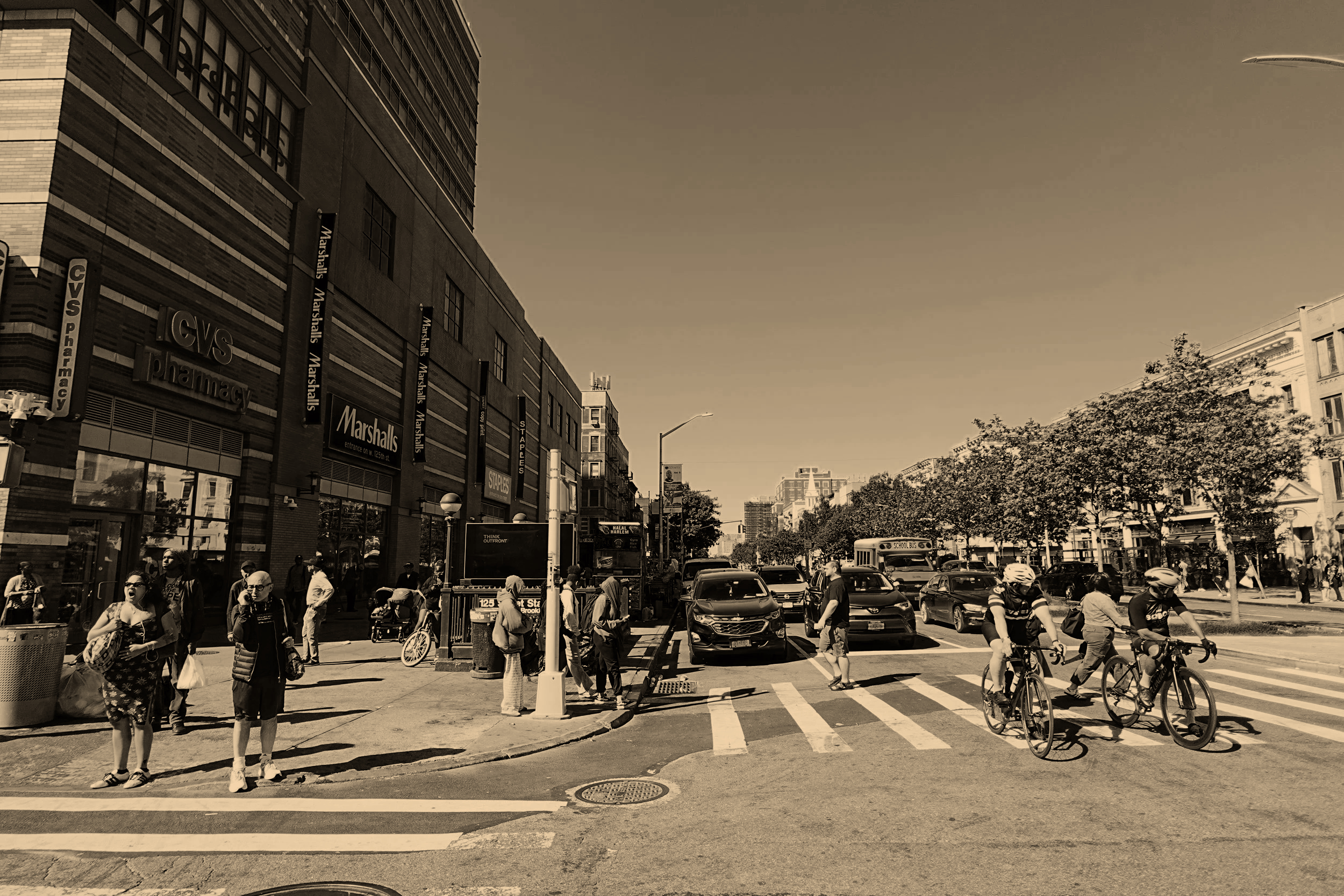
Some cities are memorable. Others are formative. New York is the latter.
Whether or not it deserves the title of “greatest city in the world” is something people will debate endlessly. But what feels less debatable is its impact. New York leaves an imprint—on how you think, how you move, how you see yourself in the world.
It is not a city that blends quietly into memory.
It demands attention.
What struck me most, living there, was not a single landmark or moment, but the density of experience. Culture is not curated from a distance—it surrounds you. Theaters, museums, music, fashion, film—it all exists in constant motion, layered into everyday life.
There is a rhythm to it.
Broadway glowing in the evening.
A museum visit that turns into hours.
A late night that ends somewhere unexpected.
Nothing feels entirely separate. The city folds everything into itself.
I remember seeing my first Jean-Michel Basquiat at the Brooklyn Museum. It was not just about the work—it was the immediacy of it. Something once distant, suddenly present.
New York has a way of collapsing that distance.
The same could be said for its music.
Rooms like Birdland, Village Vanguard, and Blue Note Jazz Club do not feel like venues so much as living archives. The sound, the atmosphere, the history—it all lingers.
Beyond that, there are the neighborhoods that give the city its texture.
Chinatown. Little Italy. Koreatown.
And further uptown, Spanish Harlem—alive with history, rhythm, and cultural memory that continues to shape the city’s identity.
Then there is The Bronx—the Boogie Down—where a different kind of energy was born. A place that gave rise to movements, to sound, to a cultural force that extended far beyond its streets. It carries its own pulse, distinct and unmistakable.
Each neighborhood feels self-contained, yet inseparable from the whole.
Living in Chinatown and Little Italy, I experienced the city at a closer range. The pace, the proximity, the constant movement—it becomes something you adapt to, and eventually, something you carry with you.
Not everything is polished.
And that is part of the point.
I remember being near CBGB before it closed—aware, even then, that it represented something raw and unfiltered. The artists who moved through that space were not concerned with refinement. They were concerned with expression.
That distinction matters.
There was a kind of fearlessness in that world—something direct, unedited, and entirely self-defined. Even observing it from the outside, it held a certain pull. It suggested a way of living without constant adjustment, without waiting for approval.
That kind of presence is difficult to ignore.
New York makes space for that contrast.
It accommodates precision and disorder at the same time.
The opera and the underground show.
The gallery and the street corner.
These elements do not compete—they coexist.
The city, in that sense, feels complete.
Of course, it is also demanding.
The pace is relentless. The cost is constant. The subways, the noise, the physical wear of moving through it day after day—none of it is easy. And yet, those same conditions shape something in return.
Resilience.
Over time, you adjust. You move differently. You think differently. You become more aware of what you can handle.
That lesson stays.
It is why the idea—made famous by Frank Sinatra—resonates so strongly. If you can make it there, you begin to believe you can make it anywhere.
That belief is not abstract. It is earned.
It carries into other cities, other countries, other phases of life. It creates a kind of internal steadiness, built from experience rather than assumption.
New York gives you that.
But it also changes.
After COVID, the shift was noticeable. Some of what once defined the city remains intact. Other parts feel diminished, or entirely gone. Certain spaces exist now more in memory than in reality.
Still, the core of it persists.
Because what defines New York is not only its institutions or its history.
It is its people.
The ones who come to build something.
The ones who stay despite the difficulty.
The ones who move through it without needing to belong anywhere else.
It is one of the few places where you can feel completely anonymous and deeply connected at the same time.
That contradiction is part of its identity.
Every city offers something distinct—its own culture, its own pace, its own perspective.
But New York operates differently.
It is louder. Faster. Less forgiving.
More immediate. More demanding. More alive.
It does not ask to be liked.
It asks to be experienced.
And once it has been, it is difficult to forget.
Because home is not always where you begin.
Sometimes, it is the place that reshapes you.
And once that happens, it stays.